Monday, February 20, 2012

New Website and Blog


Please visit my new website and blog to learn more about my latest efforts with mixed media photography:
http://www.MargaretHelthaler.com

Friday, November 25, 2011

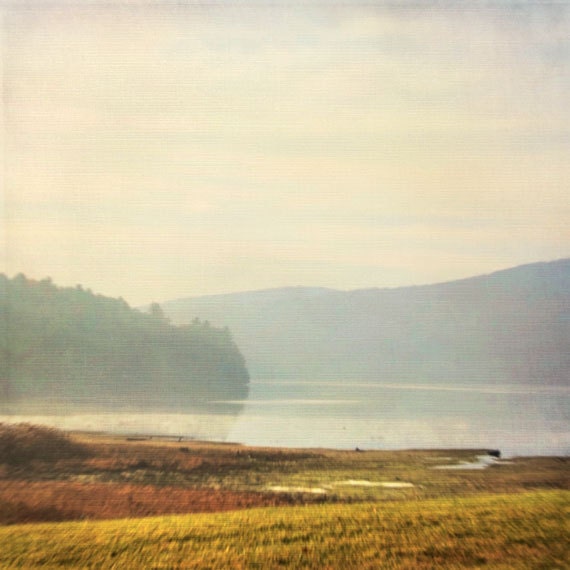
Autumnal Light • 8x8 Pigment Print

This piece is one of several new images showing at the Catskill Artist Gallery's Holiday Show. The opening is Saturday, November 25 from 4 to 8 pm.

Sunday, October 30, 2011

Catskill Winter Skies

Catskill Winter Sky 3 • 8x8 Pigment Print • ©Margaret Helthaler 2011


Catskill Winter Sky 2 • 8x8 Pigment Print • ©Margaret Helthaler 2011


Catskill Winter Sky 1 • 8x8 Pigment Print • ©Margaret Helthaler 2011

My recent focus on the Jersey Shore skyline combined with an unexpected late October snowstorm inspired me to explore the wintery Catskill Mountain skyline. In this series of images I have added a soft focus and a hint of texture to create an evocative sense of place.

Monday, October 17, 2011

A Little Tone and Texture Adds Vintage Charm

Cape May Lighthouse • 8x8 pigment print • ©Margaret Helthaler

My recent trip to the Jersey Shore has inspired a new body of work. Here the Cape May Lighthouse stands tall with just a hint of canvas texture and tone for vintage charm. Thanks to Brenda Clarke for the wonderful textures she shares on Flickr.com

Wednesday, October 12, 2011

Storm Clouds Gather over Morey's Pier in Wildwood, NJ

Approaching Storm • 12x18 pigment print • ©Margaret Helthaler


Just spent a lovely weekend in Wildwood New Jersey and found the landscape - so different from the Catskills - inspirational as always. I love the deep beach in Wildwood and the perspective it added to the lumbering October clouds...

Saturday, April 23, 2011

Looking For Spring In The Catskills


Our crocuses have come and gone, but the chilly weather remains. I awoke to heavy rain and remnants of snow here in the Catskills... I dream of warm sunshine and green subjects to photograph...

Tuesday, February 8, 2011

Morning Light

Winter Morning

Nostalgia plays a large role in my visual work. I suspect it comes from growing up in a multi-generation home, which imbued me with a strong awareness of a history before my own lifetime. Considering my penchant for romanticizing the past, it may come as a surprise to learn that morning is my favorite time to take photographs.

I woke this morning to a fresh blanket of snow bathed in the cool light of the clearing sky. Morning light holds such promise – it creeps, it soothes, it shimmers – it changes by the minute – offering so many possibilities...

Tuesday, February 1, 2011

Questioning the Permanency of New Media and Social Networking


Pages from my great-grandmother's autograph book, 1881

As I made a post to Facebook this morning – commenting on the weather and joking with a friend – I thought about the changes we have seen in the last decade. When I was twelve years old I bought a small cloth bound journal for my friends to write in. Coincidentally, we soon moved thirty miles away, to live with my grandmother, so the book became a means for my friends to pen their goodbyes. It is a true keepsake.

A few years ago, I was delighted to discover my great-grandmother had kept a similar little book. It was given to her as a Christmas gift in 1881 – she was 14 years old. I have shared a few pages from the book above. Not only does the text in this book give me a glimpse of the young girl she once was, it also shows me she shared my fondness for pansies. I have warm memories of working with my grandmother (her daughter) to plant these little flowers in the old cement pig troughs in the back corner of our yard. Years later, when I married my husband in the nearby garden, we placed pots of pansies on the tables. I felt my grandmother’s presence in their deep, velvety faces. And here, in my great-grandmother’s little book, she offers a small sketch of the flowers above the word “Autographs.”

But I digress... What I’m really wondering is will my daughter have a similar keepsake to share with future generations? In this age of texting and social networking, young people are sharing even the most mundane aspects of their lives on a daily basis. Moving thirty miles no longer means a loss of contact with old friends – they are as close as a touch of a button. But how permanent is this new means of communication? Will these digital archives become the treasures of the future? Or will the ease of their creation and lack of tangibility decrease their sense of value? Will they simply disappear?

Monday, January 24, 2011

Photography and Memory


My Grandmother's Siblings circa 1903
Clark, George, and Alice Sheley


They say you can’t go home again, and for the most part, this is true. When I visit our family property I no longer feel the same connection with the place I once did. But there is one tangible way we can revisit the past: through pictures. When I look at pictures of our family home I am immediately carried back to the time and place when the image was captured. Photographs are deeply entwined with our memories.

Perhaps even more interesting is a photograph’s ability to carry us to a time and place we have never witnessed first hand. The pictures I have shared above are two of my favorites out of all of our old family photographs. The story, as I remember my grandmother telling it, is that a photographer was traveling through the area. He wanted to take a picture of my grandmother’s siblings in the doorway of their home “on top of the hill.” (The family would later move down the mountain to live with my grandmother’s grandparents in the house pictured below.) My grandmother was either a baby, or not born yet, so she is not in the picture. But she would talk about the pictures as if she were there when they were taken. Helen (my great-grandmother) was concerned that her daughter’s hair wasn’t combed. You can see she appears to be fretting in the first picture – with a comb clasp in her left hand and her right hand pressed to her cheek in dismay. Of course we can’t actually see Helen’s face, but after hearing my grandmother tell the story, I can picture it. The children are oblivious to their mother’s concern and are enraptured with the novelty of having their picture taken. In the second picture, Helen has her way and combs her daughter’s hair.

I don’t really know which photograph was taken first. But we tend to add our own narrative to everything we see, and these images are so evocative...

Thursday, January 20, 2011

2011 Resolutions

Our Family Home circa the 1920s?

My resolution for 2011 is to carve out more time for personal projects... As you can see by this tardy blog post - I'm off to a great start. ;-) But I am going to make more of an effort to share what I am working on. My current project is a book about our ancestral home - which was built in the early 1900s and sheltered 6 generations of our family until it was recently sold...

Wednesday, December 9, 2009

The Appeal of the Square Format...

I see things first and foremost through the eyes of a designer. If I were to paint, I would be an abstract painter – reducing the natural world around me to the most basic elements of shape, color, texture, and composition. I suspect this is also why I am attracted to the square format in my photography work. The unity and cohesiveness of the equal sides suggests the image is but a unit of a larger whole. We experience our environment through a series of basic sensory interactions, which our mind then combines to create an overall feeling. However, we are only able to consciously focus on one interaction at a time. Thus, the square format is a good way to show a glimpse of awareness – as demonstrated in this image of a barn window. The blackness of the window panes, the one long bleached board, the dried winter weeds and the knotty texture of the wood are but small details of the barn itself (see the full barn image posted below.) Yet the basic elements of shape, color, texture and composition are so rich...

Monday, December 7, 2009

Preliminary Stages of a New Body of Work


Embracing the lens and the digital dark room - I intend to focus on wintery Catskill landscapes over the coming months...

Thursday, October 22, 2009

Group Show at Catskill Artist Gallery, Liberty, NY

Some of my work is currently in a group show at the Catskill Artists Gallery, 38 Main Street, Liberty, NY. The show will be up until November 29.

The Importance of Physcial Processes In Making Art

Here's a link to a video of my lecture at SUNY College at New Paltz for anyone who is interested in watching:
http://imsnp.mediasite.com/mediasite/Viewer/?peid=cda0329a26894e13903e66a8a7da8a69

Monday, October 19, 2009

Lecture At SUNY College at New Paltz

I have been invited to present a lecture on my work at SUNY College at New Paltz on 6:30 p.m. on Wednesday evening, October 21. Check out this link for more info...

Tuesday, September 8, 2009

Deja Vu Series


Deja Vu #5 and Deja Vu #4 • Pinhole Photographs with digital TTV effect

I feel the pull of distance everyday. My daily life is separate from the land. I am too busy to stop and notice. I am too busy to connect. In her book The Lure of the Local, Lucy Lippard claims, “Virtually all ancient spiritual models in every culture emerge from or exist in intimate relation to land or place.” Therefore, doesn’t our growing distance from the land ultimately represent a weakening of our spirituality? My desire to close the gap motivates my work. I want to stop and notice. I want to connect. Perhaps it is more accurate to say, “I want to feel,” since spirituality and place are sensual.

How can I depict these feelings with/in my work? I appreciated Lippard’s quote of Richards Misrach’s comment, “…beauty can be a very powerful conveyor of difficult ideas. It engages people when they might look away.” But I also agree with Lippard’s observation, “Conventional landscape photography tends to overwhelm place with image.”

I am trying to visually capture the essence of an idea. I am trying to show a feeling. I am trying to portray a hidden world. A world we don’t take the time to connect with. This world may only exist in the past. How do I show that?

Sunday, March 1, 2009

A Sense of Yearning

As the ongoing winter months cause the walls of my studio to close in on me, I find it appropriate to revisit some earlier writing. Here are some thoughts I penned a few years ago:

A Sense of Yearning

Since I was a child I can remember experiencing bouts of melancholy that are perhaps more accurately described as a sense of yearning. These moments seem to come to me more often in the fall, which has always been a reflective time for me. I keep a journal – have for years – but only write in it periodically. When I thumb through the pages the most common entry dates are between September and November.

I recently read a book that offers a possible explanation for my seasonal ruminations. Gretel Ehrlich sums up my thoughts most accurately in The Solace of Open Spaces. She writes:
All through autumn we hear a double voice: one says everything is ripe; the other says everything is dying. The paradox is exquisite. We feel what the Japanese call “aware” – an almost untranslatable word meaning something like “beauty tinged with sadness.”(Ehrlich p. 127)
Perhaps I become reflective in the fall because it is the time of year when the passage of time is most apparent. As each new day blooms, I am aware that another day has passed. My yearning stems from a desire to capture the passing days – or rather, to return to an earlier time.

In Black Sun, Julia Kristeva discusses the idea of a lost thing as the reason behind melancholia. She tells us, “My depression points to my not knowing how to lose – I have perhaps been unable to find a valid compensation for the loss?” (Kisteva p. 5) Kristeva’s thing defies an absolute definition, but I see a connection with my sense of yearning in a section where she notes, “Kant asserted that nostalgic persons did not desire the place of their youth but their youth itself; their desire is a search for the time and not for the thing to be recovered.” (Kristeva p. 60)


I find this concept interesting because the focus of my recent work and writings has centered on the idea of place and our physical connection with place. Until now, I believed my interest stemmed from my attraction to the landscape of my youth. Is it possible that my fascination with place actually represents a longing for a specific time (or even an earlier self)?


Rebecca Solnit observes in As Eve Said to the Serpent, “Landscape’s most crucial condition is considered to be space, but its deepest theme is time.” (Solnit p. 48) While I have been considering my connection with place (my earliest home), I have actually been considering how I interacted within the space of the landscape at a specific time (my childhood). I chose to concentrate on my physical experience because, as Diane Ackerman claims, “Our senses connect us intimately to the past, connect us in ways that our most cherished ideas never could.” (Ackerman p. xvi) My physical (or sensory) experiences create memories, which in turn can represent time. Memory is recorded time.


Furthermore, in their groundbreaking book, Memory: From Mind to Molecules, Larry Squire and Eric Kandel maintain, “Loss of memory leads to loss of self.” So, if landscape’s deepest theme is time – time that is recorded by our memory of experiencing its space – and our memories build our perception of self, then it can be reasoned that landscape can represent our identity; our shifting identity of self.


I believe it is also possible for this identity to travel beyond our life span, powered by the vehicle of our imagination. As a child I use to love to listen to my grandmother’s stories about growing up in the very home we lived in. I would walk barefoot along the cool dirt paths in her garden with my denim skirt swishing around my legs – imagining I lived in the “olden days.” Of course, my play romanticized the time. My grandmother’s world (as I created it) was much more attractive than my own. This is not so uncommon. Rebecca Solnit declares, “Our culture is pervaded by nostalgia for things that may never have existed.” (Solnit p. 1) We imagine the lives of earlier generations as simpler than our own. Much like the promise of a peaceful afterlife, time provides distance from the discomforts of reality.


Ultimately, I believe my yearning for an earlier, romanticized time is actually a longing for a return of innocence. It could be the innocence of my youth, before pubescent and/or adult concerns began piling up. Or perhaps my desire should be traced back over time to the concept of original sin – the innocence of our species. We all have fantasies of simpler times because as we shed our naiveté we can’t help but see death on the other side of beauty.

Sunday, February 22, 2009

New York Wildflowers

I am by no means a botanist and only know the common names of a few flowers from having grown up in a rural environment. Of course this didn’t stop me from impressing some out of town friends years ago during a hike through the Catskill Mountains. I began naming all the plants we encountered and they were amazed by my skill until some of the names became so outlandish they couldn’t help but realize I was making a majority of them up as I went along. : )

All humor aside, I wasn’t terribly concerned by my lack of botanical knowledge until I began to focus on tiny weeds as subjects in my
Roadside Flowers scannography series. I was less than satisfied with titles like Yellow Weed and was hard pressed to discover the true name of my subjects. I will be eternally grateful to the Connecticut Botanical Society and their wonderful website on Connecticut Wildflowers. Obviously, as neighbors Connecticut and New York share a lot of the same wildflowers and the great images I found on the Connecticut Botanical Society’s website enabled me to identify a number of my subjects. Here are some of my discoveries:


This is a great example of my ignorance. I discovered this flower while hiking along a trail at Sam’s Point in late October. The details captured in the scan were barely discernible by the naked eye and I named the image Paper White because of the quality of the petals. At the time, I did not know that there is another kind of flower called Paper White and the title I had come up with is a misnomer. The true name for this tiny flower is Sweet Everlasting (Catfoot) or Pseudognaphalium obtusifolium (Gnaphalium obtusifolium) as seen here.


This series was dubbed Blue Wild Flower 1 & 2. The true name is Chicory or Cichorium intybus as seen here.
I remember reading about how Chicory roots were used to make a coffee substitute during the civil war – but I never knew it was the pretty blue flowers growing along my road.


And what I
simply called Yellow Weed is really Common St. Johnswort or Hypericum perforatum as seen here.


This tiny sprig from a bush I titled Pink – for obvious reasons. But its true name is much better. It’s called Meadowsweet or Spiraea alba (Spiraea latifolia) as seen here.


Just as focusing on tiny subjects in the Catskill/Hudson Valley Region caused me to be more appreciative of the details in the surrounding landscape, learning more about my subjects has proven to be equally delightful.

Saturday, January 10, 2009

The Increasing Popularity of Scanography

Yellow Weed

A few years ago when I began scanning subjects directly on my flatbed scanner I wasn't sure what to call the process. Ever willing to conduct some research, I searched the internet to find what others were calling the technique. I figured I couldn't be the only one having so much fun. But when I first began my search I had a difficult time finding other examples. I did eventually come across a few folks who were working with the medium in similar ways and called the process "scanography." I'm not crazy about the name… it sounds medical to me. But the name seems to have stuck and there appears to be a growing interest in the process. Now when you google "scanography" a whole slew of sites come up. Here are a few that I find informative:

http://www.scanner-magic.com/index.html

http://www.scannography.org/

http://www.shows2go.si.edu/exhibitions/2007/12/scanner-photogr.html

http://blog.scannography.info/

Friday, August 8, 2008

The TTV Effect


Beach Path

I have been experimenting with digitally creating the TTV effect. TTV or "Through the Viewfinder" is the photographic process of taking a picture with one camera through the lens of another camera. Typically, it creates an image with a distinct dark border and some lens distortion with dust and imperfections. Since many of my images are captured without a lens (using a scanner or pinhole camera) I thought it would be interesting to explore the unique results achieved by bringing these divergent processes together.

This image was originally captured with my pinhole camera.